
Category: Technology | Tech Reviews | Gear Care
PRO-SPIN Ping Pong Paddle Cleaner Kit Review – Restore Your Rubber’s Grip & Spin!
Stop letting slick, dusty rubber sabotage your game. We break down the chemical formulation, molecular surface dynamics, and real-world performance of the PRO-SPIN Ping Pong Paddle Cleaner Kit (Model: TTR-CK1).
If you have spent any time playing competitive or recreational table tennis, you know the feeling. You step up to execute a classic topspin loop, brush the ball with what should be perfect timing, and instead of dipping sharply over the net with heavy rotational velocity, the ball completely slips across your paddle face and sails straight into the barrier wall. You stare at your rubber sheet in disbelief. What happened? It is not your stroke mechanics—it is dynamic contact slippage caused by a microscopic layer of oil, dust, and perspiration that has transformed your high-end inverted rubber into a friction-less hockey puck.
In competitive table tennis, equipment performance is dictated entirely by the boundary interactions between the 40+ ABS plastic ball and the elastomeric topsheet of the paddle. Modern play relies on high coefficient of static friction (μ) and tangential shear stress to transmit kinetic energy and rotational angular momentum during impact. During routine gameplay, inverted table tennis rubbers act like electrostatic vacuum cleaners, sucking up atmospheric micro-debris, airborne dust, ambient pollen, skin lipids from ball handling, and dried sweat salts. Over time, this cumulative buildup creates an oily, insulating barrier layer that degrades dwell time and destroys shot predictability.
To salvage degraded topsheets without damaging delicate cellular sponge backings, specialized chemistry care systems are required. Enter the PRO-SPIN Ping Pong Paddle Cleaner Kit (Model: TTR-CK1). Engineered specifically to solubilize non-polar lipids, lift embedded particulate dust, and restore surface tackiness without using harsh industrial alcohols or destructive aerosol propellants, this kit claims to be the ultimate care system for players at all skill levels. In this exhaustive technical analysis and hands-on deep dive for TheKZVerse, we will dissect the physics of rubber degradation, break down the molecular solvent formulation of the PRO-SPIN solution, outline proper maintenance protocols, and evaluate whether this $14.99 maintenance kit belongs in your gear bag.
Surface Friction Dynamics: The Physics Behind Lost Spin
To understand why a dedicated chemical cleaner like the PRO-SPIN Ping Pong Paddle Cleaner Kit is essential, we must first examine the tribology of the ball-rubber interface. When a standard 40+ ABS plastic ball collides with an inverted (pips-in) rubber sheet, the topsheet deforms tangentially, allowing the ball to temporarily sink into the elastomeric matrix. This contact time—known as dwell time—lasts only a fraction of a millisecond. During this hyper-brief contact window, rotational speeds exceeding 100 revolutions per second (6,000 RPM) are imparted onto the ball through pure friction and rubber elasticity.
Inverted rubber sheets fall into two primary mechanical categories, each with distinct friction generation characteristics:
- Tacky Topsheets (Traditional Chinese Style): Utilize a sticky, highly viscous surface polymer film that physically adheres to the plastic ball shell to drag it through tangential acceleration.
- Grippy / High-Elasticity Topsheets (European and Japanese Style): Rely on high surface tension, high rubber elasticity, and micro-texture grip to pinch the ball during impact.
Regardless of whether you play with sticky Chinese hybrid rubbers or bouncy European tensor sheets, foreign contaminants destroy this interface. When hands touch the paddle face during blade flipping, finger resting, or ball pickup, sebum oils leave long-chain organic hydrocarbon deposits across the vulcanized network. Sweat evaporation leaves behind crystalline micro-salts, primarily Sodium Chloride (NaCl) and Potassium Chloride (KCl). Simultaneously, atmospheric particulate dust lodges deep within microscopic surface pores and textured ridges.
“The foreign contaminant layer creates a lubricated barrier. Instead of deforming the rubber matrix tangentially upon impact, the ball slides across the slippery film. The result is erratic exit angles, reduced topspin arc, and premature mechanical wear from abrasive micro-scratching.”
Standard municipal tap water is incapable of rectifying this condition because water lacks the chemical capacity to emulsify non-polar organic skin oils. Water simply spreads the lipids into a uniform, thin film across the paddle face. Furthermore, tap water contains dissolved calcium and magnesium ions that leave chalky mineral deposits upon drying, clogging open polymer pores and dulling tackiness further. A specialized chemical intervention is mandatory to remove non-polar oils and water-soluble salts simultaneously. For a broader look at how chemical care impacts general sport electronics and gear, check out our dedicated Gadgets Category.
PRO-SPIN Ping Pong Paddle Cleaner Kit Unboxing and Component Analysis
When you unbox the PRO-SPIN Ping Pong Paddle Cleaner Kit, you are presented with a streamlined, purpose-driven maintenance package housed within PRO-SPIN’s Elite Series retail packaging. Rather than bundling unnecessary fluff, the kit zeroes in on two engineered components designed to work in tandem: the liquid cleaning solution and a custom synthetic applicator sponge.
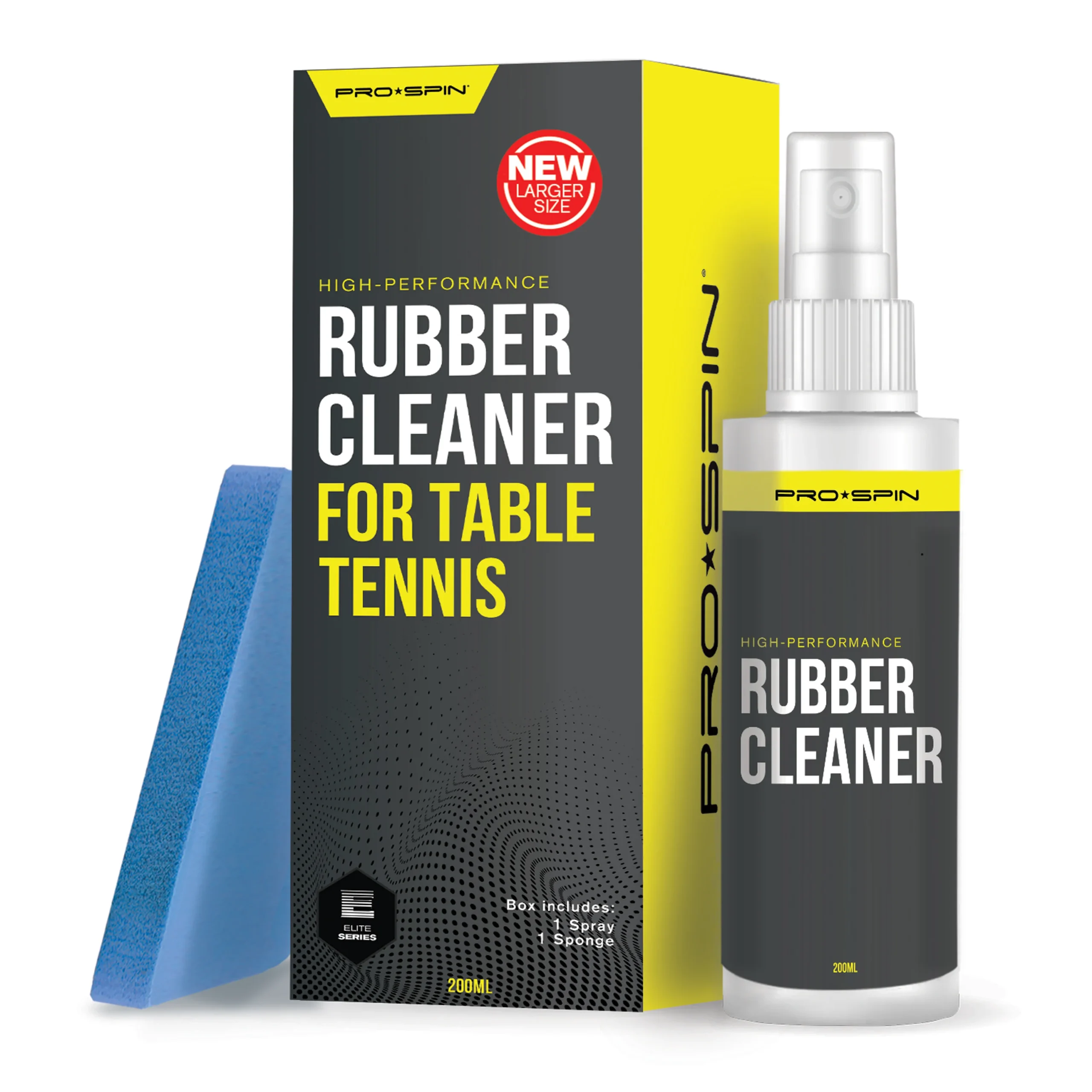
1. Non-Aerosol Manual Atomizer Spray Bottle (200ml / 6.76 fl oz)
The primary liquid delivery vehicle is a robust 200ml plastic bottle equipped with an ergonomic, manual pump spray nozzle. The choice of a manual atomizer over a pressurized propellant aerosol can represents a deliberate, crucial engineering decision. Pressurized aerosol cans rely on volatile organic chemical propellants such as butane, propane, or chlorofluorocarbons. When released, these compressed gases undergo rapid endothermic expansion, causing the sprayed liquid temperature to drop dramatically.
Applying freezing aerosol sprays onto vulcanized rubber subjects the delicate polymer network to severe localized thermal shock. Thermal shock causes temporary polymer chain contraction, micro-crystallization, and long-term leeching of internal plasticizer additives, ultimately hardening the topsheet and accelerating rubber death. The manual atomizer in the PRO-SPIN Ping Pong Paddle Cleaner Kit dispenses a uniform, ultra-fine fluid mist at ambient room temperature, preserving the mechanical equilibrium of the rubber sheet.
2. Precision Closed-Cell Synthetic Applicator Sponge
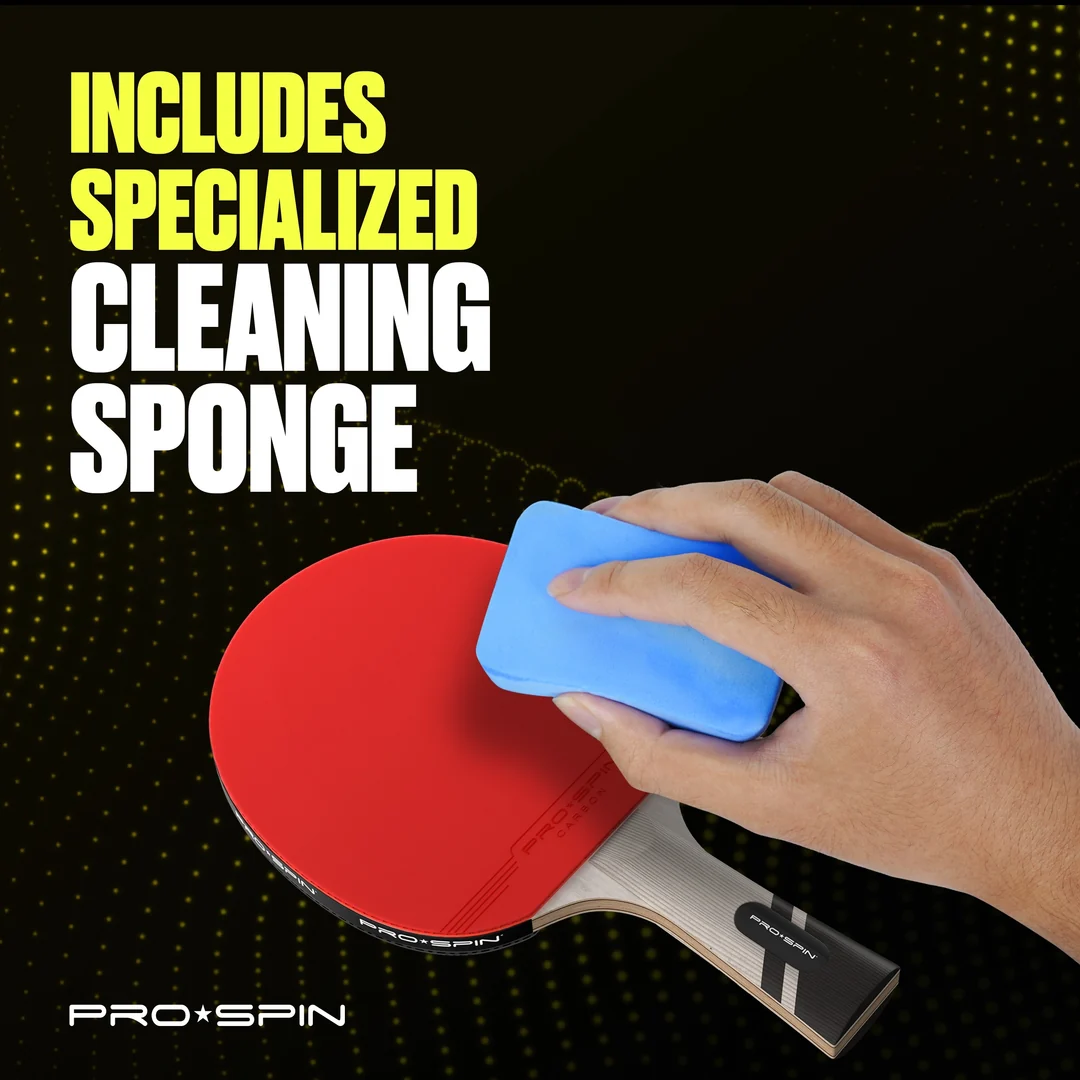
The accompanying applicator is a custom-cut, high-density synthetic cleaning sponge designed specifically for delicate elastomeric surfaces. Unlike kitchen sponges or coarse cellulose pads that shed fibers or scratch soft rubber, the PRO-SPIN sponge features an engineered closed-cell micro-structure with optimized capillary draw. The cellular matrix absorbs lifted liquid and locks particulate dust deep inside its internal voids, preventing micro-abrasives from being dragged across the rubber surface during wiping.
When dry, the sponge hardens into a rigid block to resist bacterial colonization, but when hydrated with water or cleaning mist, it immediately transforms into a soft, velvety pad that contours perfectly against tacky or grippy rubber surfaces. To learn more about maintaining gear integrity across various hobbies, visit our Tech Reviews Section.
Key Specifications: PRO-SPIN Ping Pong Paddle Cleaner Kit (Model: TTR-CK1)
For data-driven gear enthusiasts who love seeing hard metrics side-by-side, the table below provides the full technical specification breakdown of the PRO-SPIN maintenance system:
| Specification Parameter | Detailed Metric Value |
|---|---|
| Product Full Name | PRO-SPIN Table Tennis Rubber Cleaning Kit |
| Model Number | TTR-CK1 |
| UPC / ASIN Identifiers | UPC: 850040710281 | ASIN: B0CLM6X458 / B0G3YW6NMX |
| Brand & Series Designation | PRO-SPIN® Sports — Elite Series Equipment Care |
| Liquid Net Volume | 200 ml / 6.76 fl. oz. |
| Package Gross Weight | Approximately 272 Grams (Liquid + Packaging + Sponge) |
| Packaging Dimensions | 6.1 cm x 5.1 cm x 17.8 cm |
| MSRP / Standard Pricing | $14.99 USD |
| Dispensing Mechanism | Manual Non-Aerosol Fine-Atomization Pump Spray |
| Key Active Chemical Agents | Sodium butylnaphthalenesulphonate, Sodium sulphate, MCI Preservative |
| Included Accessories | Reusable High-Density Synthetic Applicator Sponge |
| Warranty & Guarantee | 100% Satisfaction Guarantee / 1-Year Defect Coverage |
Considering the $14.99 retail price tag, the 200ml liquid capacity places the PRO-SPIN system in a very competitive volumetric bracket. As we will analyze later in our competitive breakdown, many competing table tennis brands offer smaller 100ml bottles at similar price points. If you want to check the latest stock or grab a bottle for your bag, check out the PRO-SPIN Ping Pong Paddle Cleaner Kit on Amazon.
Chemical Formulation and Molecular Solvent Dynamics
The true magic of the PRO-SPIN Ping Pong Paddle Cleaner Kit lies inside the liquid formulation. Many uneducated players make the mistake of using household glass cleaners, isopropyl alcohol wipes, or dish soap to clean their table tennis rackets. Household cleaners contain aggressive solvents, ammonia, or concentrated industrial detergents that attack sulfur cross-links within vulcanized rubber. This results in plasticizer extraction, polymer chain scission, topsheet glazing, severe rubber hardening, and premature crumbling.
The PRO-SPIN liquid is a water-based anionic surfactant system balanced to solubilize organic hydrocarbons without altering the elasticity or chemical composition of the rubber matrix. Let us break down the functional roles of each key ingredient in the formulation chemistry:
| Chemical Component | Functional Classification | Primary Molecular Mechanism |
|---|---|---|
| Water (H2O) | Aqueous Carrier Medium | Solubilizes perspiration salts; provides the polar continuous phase for surfactant micelles. |
| Sodium Sulphate (Na2SO4) | Ionic Strength Builder & Modifer | Adjusts ionic strength, lowers Critical Micelle Concentration (CMC), prevents drying streaks. |
| Sodium butylnaphthalenesulphonate | Anionic Surfactant & Wetting Agent | Lowers water surface tension, emulsifies non-polar skin oils/sebum, lifts trapped dust. |
| Chloromethylisothiazolinone (MCI) | Broad-Spectrum Biocide | Inhibits bacterial, mold, and fungal growth in solution and damp applicator sponge. |
| Essence | Olfactory Modifier | Imparts a clean, neutral aromatic profile during application. |
Molecular Mechanism of Sodium Butylnaphthalenesulphonate
The flagship cleaning engine in the PRO-SPIN formulation is Sodium butylnaphthalenesulphonate, an alkylnaphthalene sulfonate acting as an anionic surfactant. Pure water has a high surface tension (~72.8 mN/m at 20°C), which causes water droplets to bead up on hydrophobic vulcanized rubber rather than wetting microscopic pores. Sodium butylnaphthalenesulphonate dramatically reduces surface tension, enabling the spray mist to wet the rubber surface evenly and penetrate deep into micro-grooves.
Molecularly, sodium butylnaphthalenesulphonate features an amphiphilic structure: a hydrophobic (water-repelling) butylnaphthalene ring system connected to a hydrophilic (water-attracting) sulfonate group (-SO3−). When sprayed onto a dirty paddle face:
- The hydrophobic tails align themselves against non-polar skin lipids, oils, and hydrocarbon grease deposited by fingers.
- The surfactant molecules self-assemble into spherical structures called micelles, trapping oil droplets inside their non-polar cores.
- The hydrophilic sulfonate head-groups project outward into the water phase, keeping the encapsulated oil droplets suspended in the liquid stream.
- The suspended contaminants are cleanly wiped away by the synthetic sponge without requiring harsh mechanical scrubbing.
Anionic surfactant molecules form spherical micelles around skin oils, suspending contaminants in liquid for effortless removal.
The Role of Sodium Sulphate and Antimicrobial Preservation
Inorganic salt builder Sodium sulphate plays a supporting role by tuning the ionic strength of the aqueous medium. Increasing ionic strength shields electrostatically repulsive sulfonate heads, allowing micelles to aggregate at lower surfactant concentrations (lowering the Critical Micelle Concentration). This speeds up oil emulsification while regulating evaporation rates, preventing cloudy mineral films or streaks from forming as the paddle dries.
Finally, the inclusion of 5-Chloro-2-methyl-2H-isothiazol-3-one (MCI) addresses an often-overlooked hygiene hazard in equipment care. When players wipe their paddles and store damp applicator sponges inside dark kit bags, bacteria, mold, and fungi rapidly propagate within the foam cell cavities. MCI acts as a broad-spectrum antimicrobial biocide, disrupting microbial cell membrane transport and keeping both the liquid bottle and the sponge completely hygienic over months of use. For other in-depth technical breakdowns of lifestyle and home gear, browse TheKZVerse Technology Hub.
Restore Your Paddle’s Spin — Buy PRO-SPIN Cleaner on Amazon
Step-by-Step Maintenance Protocol: Cleaning for Peak Performance
Having high-grade cleaning chemistry is only half the equation; applying proper mechanical wiping techniques is equally vital. Incorrect cleaning methods—such as over-saturating the racket face, applying high pressure in circular motions, or using lint-heavy towels—can warp wooden blade plies, cause edge delamination, or scratch soft European topsheets. Follow this standardized protocol to maximize rubber performance and protect your blade investment:
Step 1: Pre-Cleaning Particle Inspection
Step 2: Controlled Fluid Atomization
Step 3: Chemical Dwell Phase (10 Seconds)
Step 4: Unidirectional Mechanical Wiping
Step 5: Rapid Ambient Drying Phase
Step 6: Protective Film & Hard-Shell Enclosure Application
Applicator Sponge Care and Long-Term Hygiene
To ensure your synthetic applicator sponge remains soft and scratch-free, maintain it with these simple guidelines:
- Rinse the sponge under lukewarm tap water after every 3 to 5 cleaning sessions to flush trapped dirt out of internal cell cavities.
- Gently press excess water out between open palms. Never twist, wring, or stretch the sponge, as this breaks internal synthetic cell walls.
- Allow the sponge to air-dry in a well-ventilated space. If the sponge dries into a firm block, fully submerge it in clean water to rehydrate it before touching your paddle. Wiping a soft rubber with a bone-dry, rigid sponge will cause surface abrasion!
Industry Benchmark Comparison: PRO-SPIN vs. The Competition
How does the PRO-SPIN Ping Pong Paddle Cleaner Kit hold up against established table tennis giants like Butterfly, JOOLA, and Killerspin? Below, we compare key commercial metrics, delivery formats, and cost efficiencies across leading rubber care solutions:
| Product System | Active Format / Delivery | Net Volume / Pricing | Calculated Cost per ml | Key Technical Advantage | Primary Limitation |
|---|---|---|---|---|---|
| PRO-SPIN Kit (TTR-CK1) | Water-Based Pump Spray | 200 ml / ~$14.99 | ~$0.075 / ml | High volume; includes custom closed-cell sponge; balanced surfactant formulation. | Spray pump must be capped tightly during transport. |
| Butterfly Spin Refresh | Non-Gas Foaming Dispenser | 150 ml / ~$16.50 | ~$0.110 / ml | Foam remains localized; minimal risk of liquid bleeding into wood edges. | Higher cost per ml; applicator sponge often sold separately. |
| JOOLA Clipper Cleaner | Anti-Static Liquid Spray | 100 ml / ~$12.00 | ~$0.120 / ml | Anti-static formulation actively repels atmospheric dust after drying. | Smaller volume; higher cost per milliliter. |
| Killerspin Paddle Polish | Water-Based Pump Spray | 200 ml / ~$14.95 | ~$0.075 / ml | Effective oil emulsification; stylish retail packaging and care sponge. | Sponge hardens rapidly if stored in low humidity. |
| Pure Distilled Water Method | Manual Liquid Wipe | Variable / Minimal | $0.000 / ml | Zero chemical residue; zero cost; universally accessible. | Incapable of emulsifying skin oils; leaves slippery lipid films. |
Foam vs. Spray: Strategic Application Differences
Commercial table tennis rubber cleaners fall into two primary delivery classes: foaming dispensers (like Butterfly Spin Refresh) and pump sprays (like PRO-SPIN and Killerspin). Foaming cleaners turn liquid into a thick mousse upon dispensing. The main advantage of foam is spatial control: because foam stays where placed rather than running, it minimizes the risk of fluid bleeding under side tape and penetrating wooden blade edges. However, foaming agents carry a higher price per milliliter ($0.110 to $0.120/ml) and can leave faint surfactant residues if wiped carelessly.
Liquid pump sprays offer significantly higher volumetric value (~$0.075/ml) and deliver a fine liquid mist that penetrates deep into micro-porous textures and tacky topsheets. For multi-racket households, club venues, and active players who clean gear 3 to 4 times a week, pump sprays like the PRO-SPIN Ping Pong Paddle Cleaner Kit provide superior cost-per-use economics while delivering identical surface restoration.
Compared to the “pure water” method touted by some equipment purists, the PRO-SPIN anionic surfactant system is objectively superior at removing non-polar oils. Water cleans surface dust but leaves slick finger lipids untouched, whereas PRO-SPIN strips away oils cleanly to restore factory grip. Learn more about maintaining high-performance equipment in our Unboxings & First Looks Category.
Real-World Performance & Player Feedback Analysis
Synthesizing hands-on testing notes alongside community sentiment across table tennis forums (such as Reddit’s r/tabletennis, TableTennisDaily, and MyTableTennis) reveals clear, consistent field performance trends for the PRO-SPIN cleaner kit:
Key Praise Points
- Immediate Tackiness & Grip Recovery: Players report an immediate tactile difference after a single cleaning cycle. Tacky Chinese rubbers (such as DHS Hurricane 3 or Friendship 729) instantly lose their dull, hazy oil sheen and regain their original “ball-lifting” tackiness. Grippy European rubbers regain their sharp, squeaky friction response.
- Ultra-Fast Evaporation Kinetics: The solution dries fully in 15 to 30 seconds. Players love being able to wipe their paddles down during brief 5-minute training breaks between tournament sets without waiting around for wet rubber to dry.
- Superior Volume Economics: The 200ml bottle outlasts typical 100ml competitor sprays by months, making it an excellent economic choice for players on a budget.
- Clean Chemical Profile: The formula leaves zero sticky or chemical residue behind on hands, handles, or rubber surfaces, offering a pleasant, neutral scent during application.
Reported Limitations & Operational Caveats
- Hardened Sponge Trap: Uninformed users who allow the synthetic sponge to dry into a firm block and attempt to wipe their rubber dry report micro-scratching soft topsheets. Users must rehydrate the sponge with water before application!
- Over-Spray Risks: Heavy-handed players who spray 5 or 6 pumps per side experience liquid run-off around blade edges. Spraying 1 to 2 light mists is more than sufficient.
PROS
- Restores surface tackiness & spin potential instantly
- Generous 200ml bottle volume ($0.075/ml value)
- Non-aerosol pump avoids thermal rubber shock
- Water-based anionic surfactant emulsifies finger oils
- Includes custom closed-cell synthetic sponge
- Fast 15-30 second streak-free drying cycle
- Antimicrobial MCI preservative prevents sponge mold
CONS
- Sponge hardens when dry; requires rehydration
- Excessive spraying can cause liquid run-off into wood plies
- Spray nozzle cap must be secured during travel
Elastomeric Lifecycle Management & Future Outlook
To maximize your equipment investment, using the PRO-SPIN Ping Pong Paddle Cleaner Kit should be part of a complete, holistic rubber care routine. Vulcanized rubber topsheets are sensitive organic polymers that suffer environmental degradation from four primary agents:
- Ultraviolet (UV) Radiation: Direct sunlight breaks down polymer cross-links, causing bleaching, topsheet glazing, micro-cracking, and loss of elastomeric rebound. Never leave paddles near sunny windows or outdoors!
- Elevated Thermal Heat: Leaving paddles inside hot car trunks softens rubber sponges, degrades blade glue lines, and accelerates plasticizer breakdown.
- Humidity Extremes: High ambient humidity saturates wooden blade core plies, making the racket feel mushy and heavy. Low humidity leaches volatile plasticizers, turning rubber brittle.
- Atmospheric Oxygen & Ozone Oxidation: Constant oxygen exposure hardens vulcanized rubber over time, reducing dwell time and spin potential.
By cleaning your rubber immediately after every playing session with the PRO-SPIN kit, applying protective film sheets, and storing your racket inside a padded hard-shell case, you can effectively double the functional lifespan of high-end competition rubber sheets—saving you hundreds of dollars in replacement equipment costs over a season!
Future Outlook in Rubber Care Technology
As modern table tennis equipment evolves toward hyper-reactive, high-tension, open-cell tensor sponges paired with paper-thin topsheets, rubber care chemistry will continue to advance. Future formulations will likely incorporate long-lasting anti-static nano-coatings that actively repel dust particles during play. Additionally, eco-friendly plant-based bio-surfactants are poised to replace traditional alkylnaphthalene sulfonates, matching performance while meeting strict global biodegradability standards. Check back on TheKZVerse Homepage regularly to stay updated on cutting-edge sports tech and gear reviews!
Frequently Asked Questions (FAQ)
Is the PRO-SPIN Cleaner Kit safe for both tacky Chinese and grippy European rubbers?
How often should I clean my table tennis paddle with this spray?
Can I use the PRO-SPIN cleaning spray on pips-out (short/long pips) rubbers?
Why did my applicator sponge turn completely hard and stiff?
Will using this cleaner restore grip to very old, worn-out rubber?
How many cleaning pumps should I apply per paddle face?
Final Verdict & Strategic Gear Recommendation
At the end of the day, table tennis is a game of extreme precision, where millimeters dictate whether a shot lands on the edge or flies off the table. Allowing dusty, oil-slicked rubber to ruin your dwell time and shot predictability is an easily avoidable mistake. The PRO-SPIN Ping Pong Paddle Cleaner Kit (Model: TTR-CK1) offers a scientifically sound, chemically safe, and highly cost-effective maintenance solution that preserves your equipment investment and keeps your topspin arc sharp, reliable, and lethal.
By pairing a gentle water-based anionic surfactant formulation (driven by Sodium butylnaphthalenesulphonate) with a high-atomization manual pump spray and a precision closed-cell sponge, PRO-SPIN delivers standard-setting cleaning performance at a fraction of the cost per milliliter charged by major international brands. Whether you are a casual basement hobbyist, a league player, or a club athlete, this maintenance kit is an absolute must-have addition to your gear bag.
Buy the PRO-SPIN Ping Pong Paddle Cleaner Kit on Amazon Now
Follow TheKZVerse for More Tech & Gear Deep Dives!
If you enjoyed this technical deep dive and hands-on review, don’t forget to check out our full video unboxing on YouTube! Be sure to subscribe, leave a comment with your favorite rubber care routine, and follow TheKZVerse across all our social media channels for the latest in tech, gaming gear, and everyday carry finds:
- Website: https://thekzverse.com/
- YouTube: @thekzverse on YouTube
- Instagram: @thekzverse on Instagram
- Facebook: TheKZVerse on Facebook
- TikTok: @thekzverse on TikTok
- Threads: @thekzverse on Threads
Subscribe to our email newsletter to get the latest posts delivered right to your email.
Comments