
Category: Gadgets | Review & Tech Guide
Perfume Filler Review – Refill Travel Perfume Bottles in Seconds, No Spills!
From travel-ready bottom-fill atomizers to industrial packaging lines and diluent chemistry, here is the ultimate deep dive into every single type of Perfume Filler on the planet.
If you have ever tried lugging a massive 100ml glass bottle of your favorite luxury fragrance inside a cramped carry-on bag, you already know the stress. One wrong move at baggage claim and your entire wardrobe smells like a duty-free shop forever. That is exactly where the modern Perfume Filler saves the day. Whether you call it a travel atomizer, a decanting syringe, or a pocket fragrance pump, this little piece of engineering lets you transfer liquid cologne in seconds without dropping a single precious milligram on your bathroom counter.
However, the phrase “perfume filler” actually covers a massive amount of ground across the entire fragrance lifecycle. In consumer tech and everyday carry (EDC) circles, it refers to portable travel atomizers that let you load up your signature scent on the go. For boutique perfumers and fragrance collectors, it describes specialized decanting tools, syringes, and luer-lock adapters. And in commercial manufacturing facilities, a perfume filler is an automated, high-speed pneumatic packaging machine that fills hundreds of bottles per minute with extreme mathematical precision.
In this comprehensive, long-form guide on TheKZVerse, we are diving deep into every dimension of the Perfume Filler. We will break down bottom-fill vs. top-fill mechanics, solve the frustrating mystery of why travel atomizers leak on airplanes, explore professional decanting tools, dissect industrial vacuum packaging automation, and even break down the chemical diluent formulas (like SDA 40B ethanol and Dipropylene Glycol) that carry your scent on skin. Strap in, because we are turning you into a certified fragrance hardware expert!
Architecture and Mechanics of Portable Travel Perfume Fillers
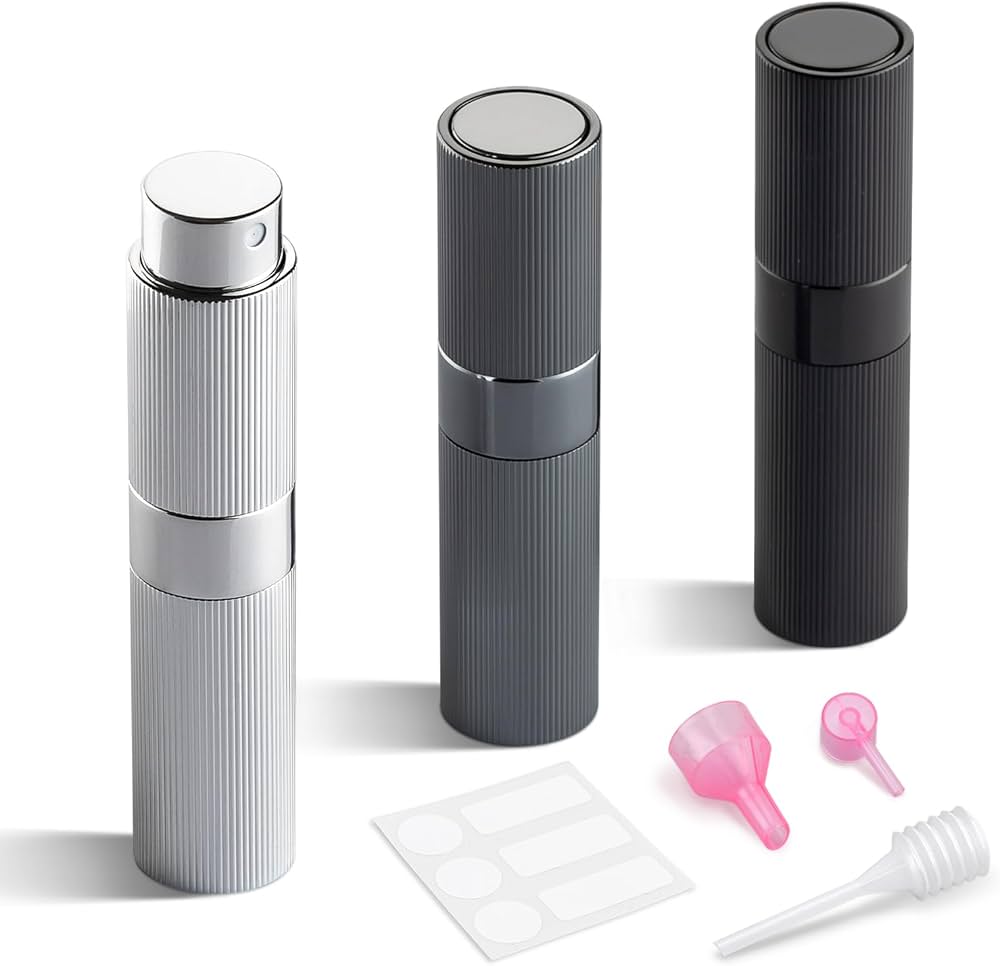
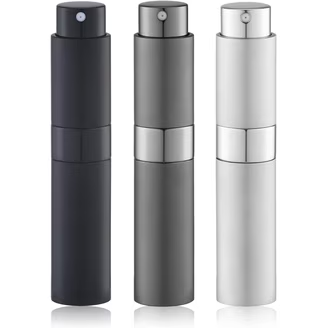
Let’s start right in the hands-on realm that matters most to travelers, commuters, and gym-goers: personal travel atomizers. A personal Perfume Filler allows you to siphon liquid fragrance directly out of a retail master bottle and seal it inside a compact, TSA-compliant tube. While dozens of brands flood online marketplaces, their underlying architecture generally falls into two distinct engineering camps: bottom-fill pump-valve mechanisms and traditional top-fill threaded vial systems.
Bottom-Fill Pump Mechanics Versus Screw-Top Vials
The bottom-fill travel Perfume Filler—made famous by brands like Travalo, SPRITZ, and endless generic variants—is designed purely for speed and convenience. At the base of the atomizer lies a flexible elastomeric valve made from synthetic rubber or specialized silicone. To operate this type of Perfume Filler, you simply pull off the spray nozzle (the actuator) from your main cologne bottle, exposing the vertical plastic riser stem.
You then align the rubber valve on the bottom of the travel unit directly over the exposed stem and press down firmly. This forms an airtight temporary seal. As you pump the travel unit up and down, the physical force drives liquid upward through the riser stem, bypassing ambient air and pumping directly into the internal reservoir. It takes less than 15 seconds to load up 50 to 60 sprays of fragrance without using a single drop-pipette or funnel.
However, despite the “magic” of bottom-fill convenience, long-term testing and laboratory evaluations reveal structural vulnerabilities. The bottom valve relies on a delicate rubber seal that must flex open under pressure and snap completely shut to trap the liquid. Over repeated refilling cycles against varying stem diameters, that synthetic elastomer slowly deforms. Microscopic air vents integrated into the casing—designed to purge displaced air during filling—can turn into permanent vapor escape routes. The end result? Slow liquid weeping, pocket stains, and gradual fragrance evaporation.
On the opposite side of the spectrum sits the top-fill screw-threaded Perfume Filler (often seen in Tekson twist-up units or classic glass decant bottles). These units use a traditional glass or high-density polymer inner bottle equipped with a threaded neck and a standard screw-on spray pump assembly. To fill a top-fill unit, you must unscrew the top sprayer and transfer liquid manually using a miniature plastic funnel, a transfer pipette, or a specialized decanting syringe attached to the source stem.
While top-fill refilling takes slightly longer and briefly exposes your fragrance to ambient oxygen, top-fill screw-threaded architectures—especially those combining a glass inner vial with an outer aluminum casing—offer vastly superior hermetic seal integrity over extended periods. If you care about long-term scent preservation, top-fill glass units remain the gold standard. For more hands-on gear reviews and breakdowns, take a look at our TheKZVerse Gadgets Category.
Aviation Dynamics and In-Flight Pressure Differential Leaks
If you have ever opened your toiletry kit after an eight-hour flight only to find your expensive Eau de Parfum completely drained into your toothbrush bag, you have suffered from cabin pressure differential leakage. Why does a portable Perfume Filler leak when flying, even when it didn’t leak on your dresser at home?
The answer comes down to atmospheric physics. When a commercial jet airliner ascends to cruising altitude, the interior cabin is pressurized to an equivalent altitude of approximately 6,000 to 8,000 feet above sea level. This causes the ambient cabin air pressure to drop from roughly 1.0 atmosphere (atm) at sea level down to about 0.75 or 0.80 atm inside the aircraft cabin during flight.
This external pressure drop creates a severe negative pressure differential between the airplane cabin and the higher internal air pressure trapped inside your travel atomizer’s liquid reservoir. According to ideal gas behavior, any trapped air pocket inside the atomizer chamber immediately expands. That expanding air exerts strong outward pressure against the liquid column inside the unit. In bottom-fill atomizers, this outward force pushes liquid straight back out through the rubber base valve or forces it up through the internal dip tube and out through the spray nozzle, causing embarrassing spills inside your luggage.
To keep your travel Perfume Filler completely bone-dry during air travel, frequent flyers and packaging engineers rely on three crucial operational protocols:
- Air Discarding (Dip Tube Purging): Turn your atomizer upside down before boarding your flight and press the spray actuator twice while inverted. This purges any liquid sitting inside the dip tube and internal spring pump, creating a clear air channel that equalizes pressure differences without pushing liquid out.
- Rigid Casing Isolation: Store your travel atomizers inside a rigid, hard-shell micro-case rather than a soft fabric dopp kit. External physical compression on a flexible atomizer body squeezes internal reservoirs and accelerates pressure leaks.
- Thread Sealing with PTFE Tape: For top-fill glass decants, apply 1.5 to 2 turns of white polytetrafluoroethylene (PTFE / plumber’s) thread-seal tape around the bottle’s neck threads before screwing on the spray cap. This completely seals microscopic gaps in the plastic threads, stopping vapor loss in its tracks.
Maintenance, Solvent Flushing, and Cross-Contamination Prevention
One of the absolute worst things you can do to a high-end Perfume Filler is pour a delicate citrus scent into an atomizer that previously held a heavy, resinous dark amber perfume. The lingering fragrance residue—known in the industry as “scent ghosting”—will permanently contaminate your fresh scent.
Natural essential oils, heavy synthetic aroma molecules, and sticky resinoid fixatives absorb directly into plastic dip tubes, rubber washers, and synthetic silicone gaskets. Simple tap water cannot clean these components because fragrance oils are lipophilic (fat-loving and water-repelling). Rinsing with water merely leaves behind an oily film that continues to emit the old scent.
To properly clean and restore a reusable Perfume Filler, you must execute a proper chemical solvent flush using one of the following alcohol carriers:
- Pure Denatured Ethanol (SDA 40B): The absolute best cleaning solvent available, matching the exact base solvent used in retail fragrances.
- 99% Isopropyl Alcohol (IPA): A highly effective, readily available solvent that rapidly dissolves stubborn fragrance oils.
- High-Proof Neutral Grain Spirits (Everclear 190-Proof): An excellent non-toxic alternative if industrial alcohols are unavailable in your region.
Fill the atomizer reservoir halfway with your chosen alcohol solvent, seal the unit, and shake it vigorously for 20 seconds. Next, spray the alcohol repeatedly through the pump mechanism into a sink or trash can until the reservoir is completely empty. This flushes residual fragrance oil out of the internal dip tube, the stainless steel spring pump chamber, and the microscopic nozzle orifice. Afterwards, leave the unit completely disassembled in a well-ventilated room for 24 to 48 hours to allow all solvent vapors to evaporate cleanly.
A quick warning regarding decanting tools: If you use plastic syringes with rubber plunger gaskets to transfer your perfume, flush them with alcohol without pulling the plunger completely out of the barrel. Completely removing the plunger strips away the thin layer of factory silicone lubricant inside the barrel, rendering the syringe useless for future vacuum drawing. Furthermore, never use pure acetone or nail polish remover to clean any plastic Perfume Filler or decanting tool! Acetone instantly dissolves polymers like polystyrene and polycarbonate, melting your gear into a sticky plastic slurry.
Travel Perfume Filler Model & Tier Comparison
To help you pick the right travel Perfume Filler for your specific lifestyle, we have compiled a head-to-head comparison table evaluating capacity, refill mechanics, materials, and real-world leak resistance across popular market tiers.
| Model / Tier | Capacity Volume | Refill Mechanism | Primary Materials | Leak & Evaporation Resistance | Best-Use Scenario |
|---|---|---|---|---|---|
| Travalo Classic / Ice | 5 ml (~50–65 sprays) | Bottom-fill elastomeric valve | Aluminum casing, plastic reservoir | Low to Moderate; rubber valve degrades over time | Daily pocket carry for a single signature scent |
| SPRITZ Hepburn / Warhol | 5 ml – 8 ml (~50–100 sprays) | Bottom-fill valve mechanism | Anodized aluminum, non-reactive liner | Moderate; high-grade casing reduces flex risks | Daily commuting and quick weekend trips |
| Argos Luxury Travel Atomizer | 8 ml – 15 ml (~80–140 sprays) | Direct stem coupling / custom fill | Heavy metal alloy, enamel / leather finish | High; rigid metallic body resists cabin pressure | Long-distance travel & heavy Extrait de Parfum |
| Tekson / Twist-Up Glass Decants | 5 ml – 10 ml (~50–120 sprays) | Top-fill screw cap (syringe / funnel) | Aluminum twist sleeve, glass inner vial | Very High; glass and threaded seal stop evaporation | Extended storage, flights, & delicate niche scents |
| Generic Bulk Plastic Atomizers | 2 ml – 5 ml (~20–50 sprays) | Top-fill screw or snap-on sprayer | Polypropylene / Polyethylene plastic | Low; plastic absorbs oil and threads leak under pressure | Temporary sampling and single-use decanting |
Fragrance Decanting Methodologies and Precision Tooling
Now let’s step beyond simple travel carry and look at the world of decanting. Decanting is the precise art of transferring liquid fragrance from a master retail bottle into smaller vials for sampling, gifting, or lab analysis. Doing this cleanly requires specialized tools designed to prevent oxidation, spillage, and volatile top-note loss.
Syringe Transfer Systems and Adapter Valves
The most basic way people try to decant perfume is by spraying directly into a small plastic funnel placed over a sample bottle. While this seems straightforward, it is actually the worst possible method. Spraying liquid through open air atomizes the fragrance into a fine mist, exposing delicate volatile top notes (like citrus bergamot, grapefruit, and light aldehydes) to oxygen. This causes instant oxidation, alters the scent profile, and fills your room with mist while wasting expensive liquid.
To execute a clean, professional transfer, experienced fragrance enthusiasts use two closed-system decanting tools:
- Decanting Syringes with Luer-Lock Stem Adapters: These custom syringes feature a specially engineered plastic nozzle adapter that presses firmly onto the exposed spray stem of your master bottle. Once attached, pulling back on the syringe plunger creates vacuum suction inside the barrel, pulling liquid straight out of the bottle without atomizing it into the air. This closed-loop process preserves 100% of the top notes and gives you exact volumetric measurement down to 0.1 ml.
- Direct Transfer Extension Valves: These are tiny plastic directional tubes that snap directly onto the source bottle’s stem. Instead of atomizing the liquid into a cloud, the valve channels the fragrance down into a thin, solid liquid stream directly entering narrow bottle necks.
If you love exploring technical gadget breakdowns and unboxing experiences like this, head over to our main hub on TheKZVerse Homepage for our latest content updates!
Thread Sealing and Headspace Thermal Management
When filling sample decants or custom bottles, two critical physical factors determine how long your fragrance will stay fresh on the shelf without leaking or degrading:
1. Thread Sealing Dynamics: Microscopic gaps exist within the plastic threads of spray caps screwed onto glass bottles. Over months of storage, volatile alcohol molecules slowly seep through these micro-gaps, causing liquid levels to drop. Wrapping bottle neck threads with 1.5 to 2 turns of PTFE tape creates an impenetrable barrier that prevents evaporation and leakage even during rough handling.
2. Headspace Expansion Buffer: Never fill a decant vial to 100% full capacity! Liquid fragrance expands and contracts with ambient room temperature changes. Leaving an empty air buffer (headspace) equal to roughly 10% to 15% of the bottle’s total volume prevents thermal expansion from forcing liquid past neck seals or cracking fragile glass vials during shipping. For more reviews on smart home and lifestyle tools, visit our Technology Section.
Industrial Perfume Filling Machinery and Packaging Automation
While travel atomizers and decanting syringes handle small volumes, industrial manufacturing facilities require heavy-duty automated machinery. In a commercial bottling facility, an industrial Perfume Filler is a sophisticated machine designed to dispense alcohol- and oil-based liquids into thousands of glass flacons per hour with blinding speed, sterile hygiene, and zero waste.
Vacuum Level Fillers Versus Volumetric Piston Systems
In high-speed commercial packaging, two primary machinery architectures dominate the industry: vacuum level fillers and positive displacement volumetric piston fillers.
Vacuum Level Filling Technology
Vacuum level fillers are the undisputed industry standard for filling luxury fine fragrances into clear glass bottles. During operation, the machine lowers a stainless steel filling nozzle down onto the glass bottle neck, creating a tight seal with a heavy-duty rubber gasket. A high-power vacuum pump removes air from inside the bottle, creating a strong negative pressure zone.
This negative pressure differential draws liquid fragrance from an overhead supply tank, down through a tube, and into the bottle. The nozzle contains a secondary vacuum return tube positioned at a precise height inside the bottleneck. As soon as liquid reaches this height, excess liquid and air bubbles are instantly sucked back out through the return tube into a vacuum collection vessel, where the liquid is filtered and recirculated back into the main tank.
Why is vacuum level filling preferred over volumetric filling for fine glass perfume bottles? Because clear glass bottles made via glass-blowing processes often suffer from slight wall-thickness variations from bottle to bottle. If you fill each bottle with the exact same volumetric milliliters of liquid, the liquid height would look uneven across a retail store shelf, creating the false perception that bottles are underfilled. Vacuum level fillers ensure every single bottle displays a perfectly identical visual fill line, regardless of internal glass variations! Furthermore, negative pressure filling prevents dripping, stops foaming, and automatically bypasses cracked bottles because a vacuum seal cannot be established on a broken bottle.
Volumetric Piston Filling Technology
Piston fillers work through positive displacement. A pneumatic or servo motor-driven piston retracts inside a high-precision cylinder, drawing an exact volume of liquid from the storage tank. The piston then reverses direction, pushing the measured liquid through a check valve and directly into the container.
Piston fillers deliver flawless volumetric accuracy regardless of ambient temperature shifts or viscosity changes. They are the ideal choice for heavy, viscous formulations such as perfume oils, body mists, fragrance gels, and lotions that are too thick for vacuum extraction systems.
Packaging Line Integration, Bottleneck Crimping, and GMP Compliance
Modern commercial fragrance packaging lines integrate bottle unscramblers, multi-head vacuum fillers, pneumatic crimpers, and outer capping stations into automated production lines. Powered by programmable logic controllers (PLCs) with touchscreen interfaces, these industrial setups reach speeds ranging from 40 to 120 bottles per minute.
Unlike standard cosmetic lotion bottles that rely on simple screw caps, luxury perfumes use permanent, non-removable crimped pump sprayers. Crimping ensures tamper resistance, stops oxygen-driven fragrance oxidation, and prevents leakages during global shipping. Automated pneumatic crimping tools utilize expanding metal collets sized to standard bottleneck collar dimensions—most commonly 13 mm, 15 mm, 18 mm, or 20 mm. The machine positions the sprayer stem, compresses the aluminum ferrule snugly around the glass neck, and forms a high-pressure seal.
To adhere strictly to global Good Manufacturing Practice (GMP) regulations, all liquid-contact components on an industrial Perfume Filler—including supply manifold tanks, filling nozzles, and valves—are constructed from high-grade 304 or 316L stainless steel, food-grade silicone, or PTFE. Stainless steel construction provides complete resistance against aggressive ethanol solvents and corrosive essential oils, allows rapid chemical sanitization between batch changeovers, and eliminates microbial contamination risks.
Industrial Packaging Machinery Comparison Table
Below is a breakdown of the four primary industrial filling machinery architectures used across fragrance, cosmetic, and personal care manufacturing lines.
| Machinery Type | Drive & Dispensing Mechanics | Viscosity Profile | Fill Height Uniformity | Foaming Risk | Key Operational Advantages | Primary Limitations |
|---|---|---|---|---|---|---|
| Vacuum Level Filler | Negative pressure vacuum draw | Low viscosity; ethanol fine fragrances, colognes | Exceptional; guarantees uniform visual fill lines | Extremely Low; vacuum purges air bubbles | Recirculates foam; automatically skips cracked glass | Requires rigid bottles; cannot process heavy oils |
| Volumetric Piston Filler | Positive displacement servo piston | Medium to high viscosity; oils, gels, lotions | Moderate; exact volume causes slight line variances | Moderate; high speed can agitate liquids | High volumetric accuracy; handles thick formulas effortlessly | Slight cosmetic fill height variations in glass |
| Gravity Overflow Filler | Downward gravity flow from holding tank | Low viscosity; water mists, splash body sprays | High; uses return overflow tube for height matching | High; falling liquid can generate surface foam | Simple mechanical design; lower equipment acquisition cost | Slower fill speed; unsuitable for thick compounds |
| Peristaltic Pump Filler | Rotating rollers compressing flexible tubing | Low to medium viscosity; niche extracts, pure oils | Moderate; controlled volumetric revolutions | Low; gentle squeezing action prevents agitation | Zero cross-contamination; liquid only touches disposable tubing | Tubing wears out over time; lower overall throughput |
Chemical Fillers and Diluent Chemistry in Fragrance Formulation
In the world of formulation chemistry, the word “filler” takes on a whole new meaning. Here, a “filler” or “carrier” refers to the liquid chemical solvent used to dilute raw, concentrated aromatic materials—such as natural essential oils, flower absolutes, and synthetic aroma chemicals—into safe, wearable liquid perfumes.
Raw fragrance concentrate is highly potent, volatile, and direct skin contact can trigger severe allergic reactions or contact dermatitis. Carrier solvents dilute these compounds to target concentrations, control evaporation rates on skin, and provide necessary projection (sillage).
Ethanol SDA 40B Versus Dipropylene Glycol Carrier Systems
The two primary carrier fillers used in professional perfumery are Specially Denatured Alcohol (SDA 40B) and Dipropylene Glycol (DPG LO+).
Specially Denatured Alcohol (SDA 40B)
SDA 40B is the international gold standard solvent for sprayable fine fragrances. It consists of high-purity ethyl alcohol (95% to 96% ethanol) denatured with trace amounts of t-butyl alcohol and denatonium benzoate (Bitrex). These denaturing agents make the alcohol unpalatable for human consumption while keeping it completely safe for topical skin application.
Ethanol possesses a high vapor pressure and a low boiling point ($78.37^\circ \text{C}$). When sprayed onto warm skin, ethanol evaporates rapidly. As it flashes off, it carries volatile top notes—like citrus, green leaves, and delicate fruits—into the air surrounding you, generating immediate scent projection (sillage) while leaving skin feeling weightless and residue-free.
Dipropylene Glycol (DPG LO+)
Dipropylene Glycol is an odorless, colorless, high-viscosity synthetic dihydric alcohol with extremely low volatility and natural moisture-binding properties. Cosmetic-grade DPG LO+ (Low Odor) is refined specifically for fragrance formulation.
DPG acts as a powerful solvent for heavy resin powders, crystalline aroma compounds, and thick plant absolutes (such as labdanum, oakmoss, benzoin, and synthetic macrocyclic musks) that refuse to dissolve in pure alcohol. The hydroxyl ($-\text{OH}$) groups in DPG form hydrogen bonds with polar fragrance molecules, lowering their vapor pressure. This effectively acts as a fixative, slowing down evaporation and extending fragrance longevity on skin for 8 to 12+ hours.
However, because DPG increases liquid viscosity, exceeding a 5% to 10% concentration in sprayable perfumes creates a sticky feeling on skin and will clog fine-mist spray nozzles. Therefore, DPG is primarily used as a pre-dissolving solvent for raw materials or as the primary carrier in oil-based roll-ons and reed diffusers.
| Chemical & Physical Property | Specially Denatured Alcohol (SDA 40B) | Dipropylene Glycol (DPG LO+) |
|---|---|---|
| Chemical Family & Formula | Monohydric Alcohol ($\text{C}_2\text{H}_5\text{OH}$) | Dihydric Glycol Ether ($\text{C}_6\text{H}_{14}\text{O}_3$) |
| Volatility & Boiling Point | Very High Volatility ($78.37^\circ \text{C}$) | Extremely Low Volatility ($232^\circ \text{C}$) |
| Primary Formulation Function | Primary spray carrier; lifts top & heart notes into air | Solvation agent for musks/resins; fixative extending longevity |
| Tactile Skin Feel | Weightless, cooling evaporative feel; zero residue | Viscous, silky, slightly oily; sticky at high levels |
| Atomizer Compatibility | Excellent; low viscosity creates ultra-fine mist spray | Poor at high levels; high viscosity causes nozzles to squirt |
| Flammability Rating | Highly Flammable Class 3 Liquid (requires storage care) | Non-Flammable under standard ambient room handling |
Concentration Tiers and Mass Balance Dilution Mathematics
The precise ratio of raw fragrance oil concentrate to carrier alcohol diluent dictates the official product concentration category, project strength, and lasting power on skin.
| Concentration Category | Essential Oil Concentration Range | Evaporation Profile | Typical Duration on Skin | Primary Application |
|---|---|---|---|---|
| Eau Fraiche | 1% – 3% oil in alcohol carrier | Rapid evaporation, high top-note flash rate | 1 – 2 hours | Light skin refreshment and post-shower splash |
| Eau de Cologne (EDC) | 2% – 5% oil in alcohol carrier | Bright, citrus-forward, rapid evaporation curve | 2 – 3 hours | Warm-weather wear, casual sports reapplication |
| Eau de Toilette (EDT) | 5% – 15% oil in alcohol carrier | Balanced evaporation; prominent heart progression | 3 – 5 hours | Daily office wear, daytime social occasions |
| Eau de Parfum (EDP) | 15% – 20% oil in alcohol carrier | Moderate evaporation; rich heart & strong base | 6 – 8 hours | Versatile daily wear, evening social events |
| Extrait de Parfum / Pure Parfum | 20% – 40% oil in alcohol carrier | Slow evaporation; deep base stays close to skin | 8 – 12+ hours | Formal evening occasions, intimate settings |
Mass Balance Dilution Formulas
Professional perfumers never measure liquid ingredients using liquid volume (milliliters) because liquid volumes shrink and expand with room temperature changes. Instead, formulations rely strictly on mass weight (grams). Calculating the required mass of carrier diluent is done using the mass balance formula:
$$C_1 W_1 = C_2 W_2$$
Where $C_1$ represents initial concentration of raw fragrance oil (100% or pre-diluted compound percentage), $W_1$ represents required mass of fragrance concentrate in grams, $C_2$ represents target final concentration percentage, and $W_2$ represents total target batch weight in grams.
To calculate the required mass of carrier alcohol diluent ($W_{\text{carrier}}$):
$$W_{\text{carrier}} = W_2 – W_1$$
Practical Example: Suppose you want to formulate a 100-gram batch ($W_2$) of Eau de Parfum at a 20% target concentration ($C_2$) using pure fragrance concentrate ($C_1 = 100\%$):
$$(1.00) \times W_1 = (0.20) \times 100\text{ g} \implies W_1 = 20\text{ grams of pure fragrance concentrate}$$
$$W_{\text{carrier}} = 100\text{ g} – 20\text{ g} = 80\text{ grams of SDA 40B alcohol diluent}$$
If your formulation calls for a 10% DPG fixative blend within the carrier weight, you would mix 8 grams of DPG LO+ into 72 grams of SDA 40B alcohol, completing the 80-gram carrier allocation while optimizing both sillage lift and skin longevity!
Pros and Cons of Consumer Perfume Fillers
To help you decide if adding a personal travel Perfume Filler to your EDC setup makes sense, here is a quick breakdown of the primary advantages and potential drawbacks based on real-world testing.
Pros
- Ultra-Portable: Fits easily in pockets, small purses, or travel dopp kits.
- TSA-Compliant: Bypasses liquid travel restrictions comfortably under 10ml limits.
- Zero Fragrance Loss: Closed-system bottom filling loads scents without air exposure.
- Cost Savings: Avoids buying expensive official brand travel-size minis.
- Protection: Aluminum casings protect inner glass from accidental floor drops.
Cons
- Valve Wear: Bottom elastomer seals can degrade after extensive refilling cycles.
- Altitude Risk: Air expansion during flights can cause leakage if unpurged.
- Scent Ghosting: Plastic dip tubes retain essential oils, requiring alcohol flushes.
- Stem Incompatibility: Non-standard or oversized bottle stems won’t fit bottom valves.
Frequently Asked Questions (FAQ)
What is a perfume filler?
Why is my bottom-fill travel perfume filler leaking?
How do you clean a reusable travel perfume atomizer?
Can I use acetone to clean my perfume decanting tools?
What is the best carrier liquid for diluting perfume oils?
Why do commercial perfume factories use vacuum level fillers instead of volumetric fillers?
Final Verdict & Real-World Recommendations
Understanding the full spectrum of the Perfume Filler—from pocket travel atomizers to industrial packaging automation and solvent chemistry—empowers you to take complete control of your fragrance collection. If you are an everyday commuter looking for quick touch-ups on the go, a bottom-fill atomizer like the Travalo Classic offers unbeatable convenience. Just remember to purge the dip tube before heading to the airport!
For fragrance collectors, decanters, and niche enthusiasts who prioritize scent preservation above all else, top-fill glass decants protected by an outer aluminum sleeve paired with PTFE thread tape deliver flawless hermetic performance. And if you are decanting at home, ditch the open funnels and invest in a set of luer-lock syringe adapters to preserve those sparkling top notes.
We hope this deep dive helped unravel the engineering and chemistry behind perfume filling! Have a favorite travel atomizer or decanting tip we missed? Drop a comment below and let us know your thoughts!
Follow TheKZVerse for More Tech, Gadget Reviews & Cool Finds!
Join our community across social media to stay updated on our latest unboxings, reviews, and hands-on guides:
Website |YouTube |Instagram |Facebook |TikTok |Threads
Don’t forget to like, comment, and subscribe on YouTube—it helps the channel grow!
Subscribe to our email newsletter to get the latest posts delivered right to your email.
Comments