
Mountain Dew Orange — I Tried It So You Don’t Have To (Honest Review)
Testing the legendary Mountain Dew Orange flavor ecosystem, from the classic Mountain Dew LiveWire to regional channel exclusives and hard malt extensions.
Every soft drink enthusiast knows that feeling when you walk up to a beverage cooler, scan the rows of standard aluminum cans, and spot an iconic orange glow tucked away in a corner. For over two decades, Mountain Dew Orange—known officially on store shelves and corporate directories as Mountain Dew LiveWire—has occupied a legendary, almost mythical status in the carbonated soft drink world. Born during the golden age of early-2000s soda innovation, this vibrant citrus extension proved that adding a heavy, tangy orange flavor profile to the high-caffeine, high-citric-acid base of original Mountain Dew was pure commercial gold.
In this massive, exhaustive hands-on deep dive for TheKZVerse, I am breaking down the entire Mountain Dew Orange experience. We are going way beyond a basic taste test. We will analyze the historical trajectory of Mountain Dew LiveWire, unpack the science behind its real orange juice emulsion, explore the controversial localized bottling dynamics that cause regional scarcity, examine line extensions like Kickstart and Hard Dew, and pit it head-to-head against traditional heavyweights like Fanta, Sunkist, and Crush. Whether you are a hardcore collector chasing rare regional releases or a casual shopper wondering why your local grocery store never has it in stock, this definitive guide has you covered.
The History and Commercial Rise of Mountain Dew LiveWire
To truly understand why Mountain Dew Orange holds such a passionate cult following, you have to travel back to the early 2000s. In 2001, PepsiCo revolutionized the carbonated beverage industry with the launch of Mountain Dew Code Red. Code Red proved that consumers were hungry for bold fruit extensions on the classic, high-energy Dew base. Building on that massive momentum, PepsiCo began developing its second nationwide flavor extension: a dedicated orange variant designed to capture the summer beverage market.
On December 12, 2002, PepsiCo filed a federal trademark application for “MTN DEW LIVEWIRE”. By February 25, 2003, the company officially announced the upcoming nationwide summer rollout. Positioning the product squarely at teenagers, young adults, and action-sports enthusiasts, PepsiCo launched LiveWire in May 2003 as a strictly limited-time offer (LTO) for a six-month summer window. The strategy was an instant blockbuster success.
“Ignited with Orange Flavor—a summer trial that delivered a massive 10% net increase in overall Mountain Dew sales volume.”
The initial 2003 promotional run was so successful that it drove a 10% net increase in overall Mountain Dew brand sales volume. That single statistic validated the commercial viability of fruit-flavored citrus hybrids. PepsiCo brought LiveWire back for a second summer LTO from March through November 2004. Recognizing sustained volume velocity during a third seasonal trial in 2005, corporate leadership officially granted LiveWire permanent SKU status in late 2005. It joined original Mountain Dew and Code Red as a permanent pillar of North American beverage distribution. For more deep dives on iconic brand histories, head over to our Tech Reviews and Unboxings section.
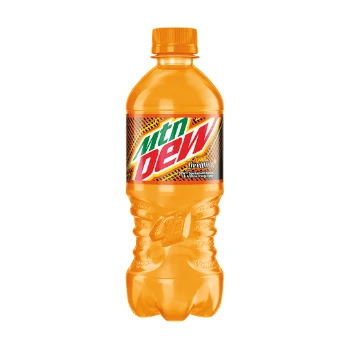
Packaging Evolution and Regulatory Branding Shifts
Over its two-decade operational history, Mountain Dew LiveWire has undergone several visual overhauls and packaging descriptor updates. These revisions reflect evolving FDA food labeling standards, ingredient focus changes, and PepsiCo’s global aesthetic modernization. Below is the historical timeline tracking the evolution of the brand’s primary marketing taglines and packaging descriptors.
| Historical Era | Marketing Tagline / Packaging Descriptor | Branding Context |
|---|---|---|
| 2003 (Pre-Launch) | “Ignited with Orange Flavor” | Prototype trade positioning and media previews |
| 2003 (Summer Launch) | “Orange Ignited. Naturally and Artificially Flavored” | Initial national advertising campaign and retail launch |
| 2004–2013 | “DEW Sparked with Orange. Naturally and Artificially Flavored” | Post-permanence mainstream packaging branding |
| 2013–2017 | “DEW SPARKED WITH NATURAL & ARTIFICIAL ORANGE FLAVOR” | Capitalized packaging redesign and regulatory update |
| 2017–2021 | “DEW Sparked with Natural & Artificial Orange Flavor” | Mixed-case aesthetic update for modern bottle silhouettes |
| 2021–2025 | “DEW Sparked with Artificial Orange Flavor” | Descriptor update reflecting updated ingredient formulations |
| 2025–Present | “ORANGE ARTIFICIALLY FLAVORED and DEW” | Global visual identity alignment and minimal label typography |
The Regional Bottling Paradox and Geographic Scarcity
If Mountain Dew LiveWire is officially a permanent national SKU, why is it so notoriously hard to find in major cities across the United States? The answer lies in what beverage industry analysts refer to as the “regional bottling paradox.” While corporate PepsiCo owns the trademark and manufactures the concentrated flavor syrup, the actual physical production, distribution, and stocking of finished retail bottles and cans are handled by a hybrid network of regional bottling entities.
This network includes corporate-owned facilities under PepsiCo Beverages North America (PBNA) as well as independent franchise bottlers like Pepsi Bottling Ventures. Under regional bottling contracts, local bottlers maintain discretionary authority over non-core SKUs. They decide which secondary flavors to manufacture based on local plant capacity, warehouse floor space, raw ingredient costs, and regional sales velocity. Original Mountain Dew and Code Red are mandatory core production SKUs, but Mountain Dew Orange is considered optional.
As a result, LiveWire enjoys near-universal, ubiquitous distribution throughout the US Midwest and parts of the Mid-Atlantic (such as Virginia and North Carolina). Conversely, it remains virtually non-existent in high-density metropolitan markets along the East and West Coasts. If you live in Los Angeles, New York City, or Miami, finding a fresh 20-ounce bottle in a gas station cooler feels like finding a pot of gold. This geographic fragmentation drives massive search volumes for queries like “Is LiveWire discontinued?” and has spawned a lucrative secondary resale market on platforms like eBay and Amazon, where dedicated enthusiasts pay steep markups to have 12-packs shipped to non-distribution zones. If you are struggling to track down rare items in your region, check out our guide on Online Shopping and Tech Sourcing Secrets.
Buy Mountain Dew LiveWire Now on Amazon
Chemical Architecture, Ingredients, and Food Science
What gives Mountain Dew Orange its unique taste, vibrant color, and shelf stability? Unlike conventional orange sodas that rely entirely on artificial flavor compounds, water, and sugar, LiveWire uses a complex beverage chemistry framework built upon real citrus concentrates and specialized emulsifiers.
Emulsion Mechanics and Technical Ingredient Breakdown
Citrus flavor oils extracted from orange peels are naturally hydrophobic—meaning they refuse to dissolve in water and will naturally float to the top of an aqueous sugar solution. To create a homogenous liquid that never separates on store shelves, PepsiCo food scientists utilize a sophisticated hydrocolloid emulsification system. Below is the functional matrix of the primary ingredients found in a standard bottle of Mountain Dew LiveWire.
- Carbonated Water & High Fructose Corn Syrup: The core solvent and primary caloric sweetener base, providing carbonation fizz and rapid glucose release.
- Concentrated Orange Juice: Real orange juice concentrate adds natural soluble solids and titratable fruit acidity. This provides authentic citrus body, mouthfeel, and a realistic fruit juice bite missing from competitors.
- Gum Arabic: A natural hydrocolloid emulsifying agent that coats micro-droplets of orange flavor oil. It keeps them suspended uniformly throughout the liquid, preventing oil ringing around the inside neck of plastic bottles.
- Citric Acid & Sodium Citrate Buffer: Citric acid establishes a sharp, low pH environment (~2.8–3.2) for antimicrobial safety and tanginess. Sodium citrate acts as a buffering agent, smoothing out the acidity so it does not burn the throat.
- Preservatives & Stabilizers: Sodium benzoate inhibits yeast and mold growth in the presence of natural juice solids. Calcium disodium EDTA sequesters trace metal ions to prevent light-induced oxidation of flavor oils.
- Colorant Matrix (Yellow 6, Yellow 5, Red 40): Synthetic food dyes engineered to transform the liquid from Dew’s classic neon-green into a vivid, glowing amber-orange shade.
The vivid amber hue and lively carbonation of Mountain Dew Orange poured over ice.
Nutritional Comparison Across Ecosystem Variants
The Mountain Dew Orange platform spans several beverage categories—ranging from full-sugar carbonated soft drinks to low-calorie morning energy hybrids and zero-sugar alcoholic beverages. Below is a detailed nutritional comparison across the primary portfolio variants.
| Product Variant | Serving Unit | Calories | Sodium | Carbs / Sugars | Caffeine | Sweetener System |
|---|---|---|---|---|---|---|
| LiveWire (12oz Can) | 12 fl oz (355 mL) | 180 kcal | 65 mg | 46 g / 46 g | 54 mg | High Fructose Corn Syrup |
| LiveWire (20oz Bottle) | 20 fl oz (591 mL) | 290 kcal | 105 mg | 77 g / 77 g | 90 mg | High Fructose Corn Syrup |
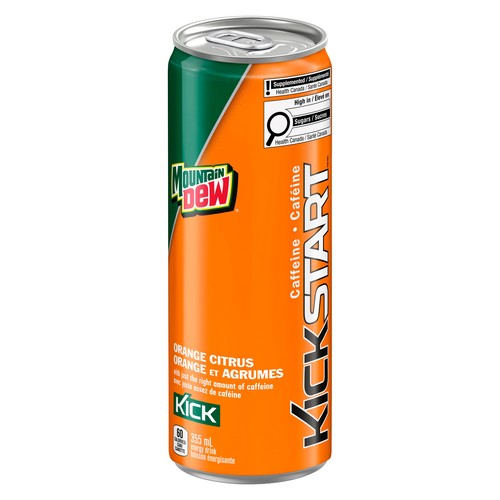
| Kickstart Orange Citrus | 16 fl oz (473 mL) | 80 kcal | 180 mg | 21 g / 20 g | 92 mg | HFCS, Sucralose, Ace-K |
| Hard LiveWire (Malt) | 12 fl oz (355 mL) | 100 kcal | 0 mg | 2 g / 0 g | 0 mg | Sucralose, Acesulfame Potassium |
Quantitative Caffeine Density Calculations
A primary factor separating Mountain Dew LiveWire from almost every standard orange soda on the market is its caffeine content. Traditional orange sodas like Fanta and Crush contain zero caffeine. LiveWire, however, maintains the exact high-caffeine charge as classic Mountain Dew.
The caffeine concentration factor (C) per fluid ounce of standard Mountain Dew LiveWire is calculated as follows:
C = 54 mg / 12 fl oz = 4.5 mg per fl oz
Applying this concentration factor across standard retail package sizes demonstrates the exact caffeine dose delivered to consumers:
Caffeine (12oz Can) = 4.5 mg/fl oz x 12 fl oz = 54 mg
Caffeine (20oz Bottle) = 4.5 mg/fl oz x 20 fl oz = 90 mg
With 54 mg of caffeine per 12-ounce serving, LiveWire delivers a substantial energy boost that far surpasses caffeine-free competitors and edges out Sunkist (~41 mg per 12 oz).
Sensory Assessment and Comparative Taste Test
How does Mountain Dew Orange actually taste when compared to the titans of the orange CSD market? During my hands-on tasting session for this review, I evaluated LiveWire across three distinct tasting phases: initial mouthfeel, mid-palate body, and the overall finish.
Palate Breakdown of Mountain Dew LiveWire
- Initial Contact (High Carbonation & Acid Bite): The moment the liquid touches your tongue, you are greeted by aggressive carbonation fizz paired with a sharp burst of citric acidity. Unlike heavy, syrup-forward orange sodas, LiveWire hits fast and crisp.
- Mid-Palate (Orange Juice Solids & Sweet Citrus): As the carbonation settles, the real orange juice concentrate shines through. You get a natural, tangy fruit profile that tastes less like artificial orange hard candy and more like a high-octane citrus punch.
- The Finish (Crisp Dew Residuals): The finish is clean, fast, and light. Thanks to the sodium citrate buffering agent and high citric acid content, it avoids leaving a sticky, cloying film on the back of your throat. You are left with a lingering citrus zest and a recognizable Dew kick.
Head-to-Head Competitor Comparison
To give you a complete picture of where LiveWire sits in the market, here is how its specs and flavor metrics stack up directly against Fanta Orange, Sunkist Orange, and Orange Crush.
| Parameter | Mountain Dew LiveWire | Fanta Orange (US) | Sunkist Orange | Orange Crush |
|---|---|---|---|---|
| Parent Enterprise | PepsiCo | The Coca-Cola Company | Keurig Dr Pepper | Keurig Dr Pepper / Bottlers |
| Caffeine (per 12 oz) | 54 mg | 0 mg | ~41 mg | 0 mg |
| Fruit Juice Content | Orange Juice Concentrate | 0% Juice (US Version) | 0% Juice | 0% Juice |
| Total Sugars (12 oz) | 46 g | ~44 g | ~43 g | ~43 g |
| Carbonation Intensity | High | Moderate-Low | Moderate | Low |
| Primary Profile | Tart Dew Base + Citrus Juice | Sweet Candy Orange | Tangy, Zesty Orange | Rich, Syrupy Orange |
The Broader Mountain Dew Orange Ecosystem
Over the past twenty years, PepsiCo has built a multi-category product ecosystem around the central concept of Mountain Dew Orange. The brand extends far beyond traditional carbonated soft drink cans into functional energy hybrids, convenience store channel exclusives, and zero-sugar adult beverages.
Mountain Dew Kickstart Orange Citrus
Launched in 2013, Mountain Dew Kickstart was engineered specifically for morning consumption occasions historically dominated by ready-to-drink orange juice and hot coffee. The Orange Citrus flavor combines 5% real fruit juice (derived from white grape and orange juice concentrates) with a high-energy Dew base. Delivering 92 mg of caffeine in a 16-ounce can, Kickstart uses a hybrid sweetener system (high fructose corn syrup combined with Sucralose and Acesulfame Potassium) to drop the calorie count to just 80. Fortified with 100% Daily Value of Vitamin C (90 mg), it offers a lighter, juice-forward profile designed to kickstart your morning routine.
Convenience Store Exclusives: Overdrive & Solar Flare
PepsiCo frequently utilizes exclusive flavor partnerships with major retail chains to drive foot traffic into convenience stores:
- Mountain Dew Overdrive (Casey’s Exclusive): Rolled out in June 2022 exclusively at Casey’s General Stores across the Midwest, Overdrive blended a light orange base with notes of mango and raspberry. Intended as an outdoor adventure fuel, Overdrive was officially sunset in late December 2025 as Casey’s transitioned its fountain taps to new seasonal rotations.
- Mountain Dew Solar Flare (7-Eleven Exclusive): Debuting in 2014 as an exclusive 7-Eleven fountain flavor, Solar Flare offered a dark red-orange tropical punch variant featuring tart orange and grapefruit notes. Highly sought after by fans, its availability slowly faded as store fountain contracts were updated.
Hard Mountain Dew LiveWire (Flavored Malt Beverage)
In late 2022, PepsiCo teamed up with the Boston Beer Company to reveal Hard Mountain Dew LiveWire. Officially hitting store shelves in March 2023, this flavored malt beverage contains 5.0% alcohol by volume (ABV), zero sugar, and 100 calories per 12-ounce serving. To comply with strict TTB federal regulations regarding premixed alcoholic beverages, all caffeine is completely removed from Hard LiveWire. Artificially sweetened with Sucralose and Acesulfame Potassium, it delivers the iconic Mountain Dew Orange flavor experience for adult social gatherings.
Explore Mountain Dew Flavors on Amazon
Pros and Cons: The Honest Verdict
Before you go hunting down a case of Mountain Dew LiveWire, here is a breakdown of its real-world strengths and drawbacks based on my extended testing.
Pros
- Authentic Citrus Taste: Real orange juice concentrate provides a natural fruit body and tartness.
- High Caffeine Kick: Delivers a solid 54 mg of caffeine per 12 oz, unmatched by most orange sodas.
- Superior Carbonation: High carbonation levels deliver a ultra-crisp, refreshing finish.
- Versatile Portfolio: Excellent zero-sugar alcoholic and lower-calorie morning options available.
- Iconic Nostalgia: Brings back peak 2000s energy and distinct visual appeal.
Cons
- Frustrating Scarcity: Decentralized regional bottling makes it very hard to buy on the East/West coasts.
- High Sugar Content: Packs 46 grams of high fructose corn syrup per 12-ounce can.
- No Standard Zero Sugar Option: Lacks a permanent diet/zero-sugar SKU for the main soda line.
- Secondary Resale Markups: Online prices from third-party sellers can be expensive.
Frequently Asked Questions About Mountain Dew Orange
Is Mountain Dew LiveWire officially discontinued?
How much caffeine is in a 20 oz bottle of Mountain Dew LiveWire?
Does Mountain Dew LiveWire contain real fruit juice?
Does Hard Mountain Dew LiveWire contain caffeine?
What is the difference between LiveWire and Kickstart Orange Citrus?
Where can I buy Mountain Dew LiveWire if my local stores don't stock it?
Final Verdict and Wrap-Up
At the end of the day, Mountain Dew Orange—anchored by the classic Mountain Dew LiveWire—remains one of the absolute best line extensions in carbonated soft drink history. By taking the aggressive, tart, high-caffeine base of original Mountain Dew and infusing it with real orange juice concentrate, PepsiCo created a citrus masterpiece that easily outclasses standard orange sodas in refreshment, flavor complexity, and energy kick.
While the regional bottling model makes tracking down a cold bottle frustrating for fans in certain parts of the country, the effort is well worth it when you find one. Whether you are cracking open a cold 12-ounce can on a hot summer afternoon or enjoying a zero-sugar Hard LiveWire at a weekend barbecue, this product platform has earned its legendary status in the beverage hall of fame. If you enjoyed this hands-on breakdown, be sure to explore our full range of reviews over in TheKZVerse Tech & Lifestyle Category!
Order Mountain Dew LiveWire Today on Amazon
Follow TheKZVerse for More Unboxings & Deep Dives
Did you enjoy this deep dive into Mountain Dew Orange? We love exploring cool finds, obscure snacks, gaming gear, and tech gadgets! Join our growing community of enthusiasts and tech lovers across all our social platforms:
- Website: TheKZVerse Official Blog
- YouTube: Subscribe to @thekzverse on YouTube
- Instagram: Follow @thekzverse on Instagram
- Facebook: Like theKZverse on Facebook
- TikTok: Follow @thekzverse on TikTok
- Threads: Follow @thekzverse on Threads
Leave a comment below and let us know: Have you tried Mountain Dew LiveWire, or is it impossible to find in your city? Let’s chat!
Subscribe to our email newsletter to get the latest posts delivered right to your email.
Comments